what is happening to the animals in the amazon rainforest
As an ecosystem, the Amazon is one of the virtually biodiverse places on earth. Over 3 million species live in the rainforest, and over 2,500 tree species (or one-third of all tropical copse that be on earth) help to create and sustain this vibrant ecosystem.
What is Biodiversity?
Biodiversity describes the differences and variations that exist between all living beings: animals, plants, microscopic bacteria, funghi, and everything else y'all tin can imagine that is considered living. Only like there'due south major differences between the different types of life, similar a goldfish and a house cat, or a person and mushroom — there's also variation beyond similar beings, similar an elm and a peach tree, or a protrude and a butterfly.
The balance between all the component parts of a biodiverse system helps to keep the ecosystem and its inhabitants (including humans!) healthy. These processes assistance purify h2o, make air breathable, command outbreaks of diseases and pests, back up pollination, build fertile soils, and shop carbon. Biodiversity is, in a sense, what makes a place breathe, alive, and stay healthy and beautiful.

Purple flowers of the Jambo tree in Belterra.
The Amazon Rainforest and Biodiversity
Biodiversity likewise describes ecosystems or environments that comprise a high degree of this variation — for case, the Amazon rainforest. As an ecosystem, the Amazon is one of the most biodiverse places on earth. Over 3 one thousand thousand species live in the rainforest, and over 2,500 tree species (or one-tertiary of all tropical trees that be on world) assistance to create and sustain this vibrant ecosystem.
More and more, biodiversity is at risk. Both in the Amazon and globally, ecosystems are existence encroached upon, altered, and transformed by human activity. This in turn impacts the biodiversity of an surface area and the types and quality of functions an environment can provide.
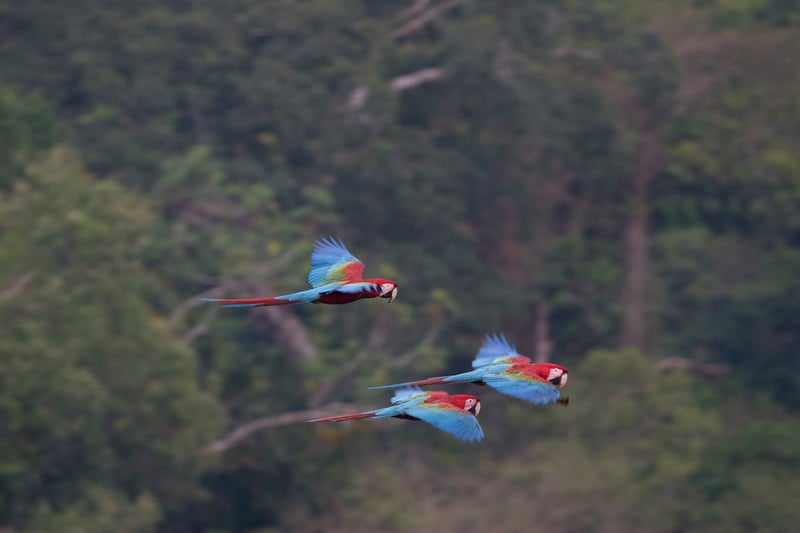
Scarlet Macaw (Ara macao) are seen here in Cristalino Land Park. This park reserve is ane of the well-nigh bio-diverse in the region and is currently under threat from illegal logging and fire.
Drivers of Biodiversity Loss
The extinction of species is happening at rates never seen before — up to a thousand times faster than what would happen naturally. According to a recent report by IPBES (The "Intergovernmental Scientific discipline-Policy Platform on Biodiversity and Ecosystem Services), an estimated 1 million species are currently facing extinction. This rate has largely picked up in the terminal twoscore years, with threatened and vulnerable species across taxa.
In the Amazon, species are threatened as human activity expands deeper into the rainforest. From August 2018 to July 2019, the Amazon lost over three,800 sq. miles of woods — an area equivalent to over i.8 1000000 football fields — which signified the highest charge per unit of deforestation in the decade. Biodiversity loss from habitat destruction is often driven past land grabbing and industrialized agricultural expansion, mining, logging, and large-scale infrastructure development, usually through deforestation. Even worse, deforestation in Indigenous lands and protected areas has skyrocketed in contempo years.
Industrial agronomics expansion, including for big industrialized crops such equally soy and cattle, often requires the clearing of forested areas and a more than permanent state use change into agronomical use. Industrialized agricultural systems, such equally those based on plantations, have very little biodiversity, and the application of pesticides can also touch on nearby ecosystems and human communities as runoff infects the broader habitat.
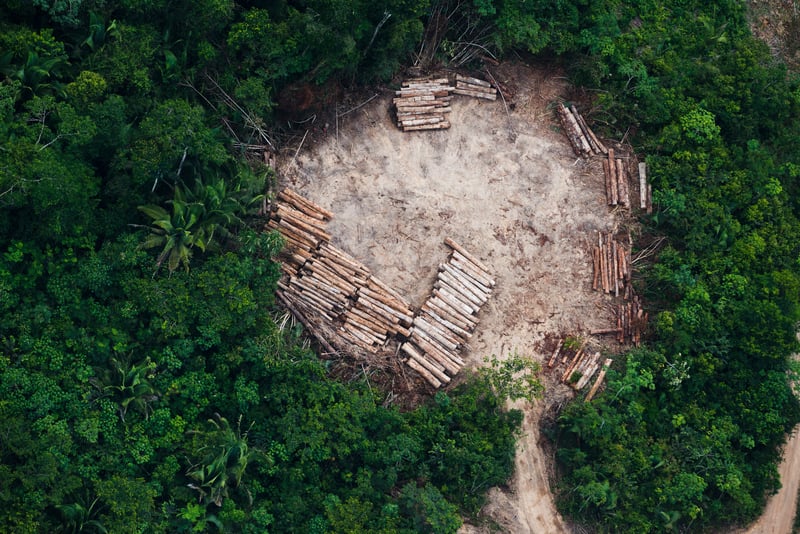
Logging platform located 3km outside the Indigenous Land of Cachoeira Seca. A Greenpeace team is in the expanse to witness the "Cachoeira Seca" (Dry Waterfall) Indigenous land, where illegal logging and land grabbing has been occurring.
Mining operations go deeper into the woods and drive the demand to build infrastructure (like roads) and deforest crucial habitats. Mining projects — on both the pocket-sized and large-scale — represent a cracking risk to water and soil given the risk of toxic leaks. Mining also spreads into protected areas, such as Indigenous Lands and Conservation Units, and vast wild animals refuge locations.
Logging can likewise harm biodiversity. Greenpeace has long investigated how logging supply chains — including for high-value woods like Ipê — tin can be rife with fraud, abuse, and illegally laundered timber that originates from protected areas and Indigenous reserves. In improver, a large-scale industrial timber plantation that replaces a natural forest area will have much less biodiversity, and is the equivalent of an agricultural "monocrop."

Aerial photograph showing rainforest in Pará state, Brazil. The Ipê tree flowers with brilliant pink, yellow or white flowers every September. Information technology is a valuable timber for its wood, known for its durability, forcefulness and its natural resistance to disuse. Ipê growing in the Amazon has a low population density, with an boilerplate of ane tree per 10 hectares. This ways that large areas of woods need to be opened up to access these valuable trees.
Infrastructure includes roads, power, transport networks, and other large-scale projects. BR 163 is a highway in the country of Pará (PA) that cuts into endangered species´ habitats and has made the surrounding surface area subject to deforestation and habitat destruction. Other infrastructure, similar hydropower dams, can deeply disrupt habitats and affect the environment, people, and biodiversity in their environment past isolating species and contaminating the water.
Risks and Tipping Points
The loss of biodiversity can throw an entire ecosystem — and the resources it provides — out of balance. It can even threaten its ability to sustain itself. One concerning example of this is the growing likelihood of massive-calibration deforestation causing the Amazon rainforest to accomplish a "tipping point." This means that the hydrological cycle would exist disrupted to the bespeak that it triggers a massive woods "die-back" that could plow vast areas of the rainforest into a savannah, and with it lose immeasurable amounts of biodiversity.
Furthermore, there are additional risks to destroying habitats, such every bit the increasing prevalence of zoonotic affliction. Deforestation may increment the adventure for disease outbreaks and can introduce new ways for zoonotic diseases to reach human communities and amplify their ability to spring across species. The Amazon rainforest has been identified every bit a region with a high likelihood for future zoonotic disease emergence.
Spotlight: Hyacinth Macaw (Anodorhynchus hyacinthinus)
The Hyacinth Macaw exists naturally in the Amazon, Cerrado, and Caatinga biomes; however agricultural expansion, illegal logging, and the advancement of cities have drastically reduced their habitat. Today it exists only in pocket-sized areas of these biomes, and the species is classified as Vulnerable past the IUCN (International Spousal relationship for Conservation of Nature). In the Amazon, there are still sightings in primal Pará, the epicenter of deforestation in the biome. In 2019, the area of deforestation reached 203,460 hectares in this region.

Blue macaw (Anodorhynchus hyacinthinus), also known as hyacinth macaw, in Miranda, Mato Grosso practise Sul land, Brazil.
This is one of many species in the Cerrado threatened by the agribusiness expansion fueled by a high production of soy and corn for export. This predatory model puts traditional communities and natural resources at risk.
What'southward existence done to protect biodiversity globally and in the Brazilian Amazon?
Some of the well-nigh important things we can do to protect biodiversity are:
- Protect Indigenous people and their rights and enforce existing protections. Nearly one meg Indigenous people in Brazil call the Amazon rainforest their home. Indigenous communities have a right to their livelihoods in their territories, and it is our global responsibleness to push back when their protections and livelihoods are put at risk and violated. There's been a steady rollback of environmental protections and enforcement under the Bolsonaro regime that is harming Indigenous communities, which has only continued under COVID-19 and leading deforestation and habitat destruction.

Indigenous leaders from Brazil and Greenpeace Germany activists peacefully demonstrate at the Consumer Goods Forum (CGF) Sustainability Committee Meeting in Berlin against some of the world'south biggest brands, including Nestle, Unilever and Mondelēz, to demand they end their role in forest destruction in the Amazon and across Brazil.
- Promote greater science, research, and understanding on biodiversity, especially for Brazilians. In the concluding four years there'southward been over 600 new species of plants and animals discovered in the Amazon. Besides oftentimes, these species are discovered subsequently their habitats have been encroached upon, when they are already at risk. Nosotros need to invest more in scientific research programs — like the Tatiana de Carvalho Program, a Greenpeace Brazil scholarship program for students researching the Amazon. Without proper study, we tin can't know how or what we're losing or risking when we introduce radical shifts into the environment.
- Rethink how nosotros interact with biodiversity and nature and accost the harm already caused by our current systems. In the U.s., this volition mean re-thinking if what we swallow or produce is based on sourcing practices that are often detrimental to delicate ecosystems. Destroyed forests and fragmented habitats can be restored, and at that place are alternatives to the industrialized food systems that are harming biodiversity, local communities, workers, and consumers. By protecting biodiversity, nosotros can also take positive effects on forests, the climate, and communities around the globe.
Spotlight: Milton's Titi (Plecturocebus miltoni)
First catalogued in 2014, this primate species only exists at the intersection of the Roosevelt and Aripuanã rivers in the states of Mato Grosso and Amazonas, Brazil. From January to September 2019, 204 burn down hotspots were recorded within a radius of upward to 30 kilometers from where the species lives. Over the past twelvemonth, the region has lost 3,130 hectares of forest. Because it lives exclusively in the treetops, the loss of forest encompass is fatal for this species. Its main threats are fires and forest degradation.
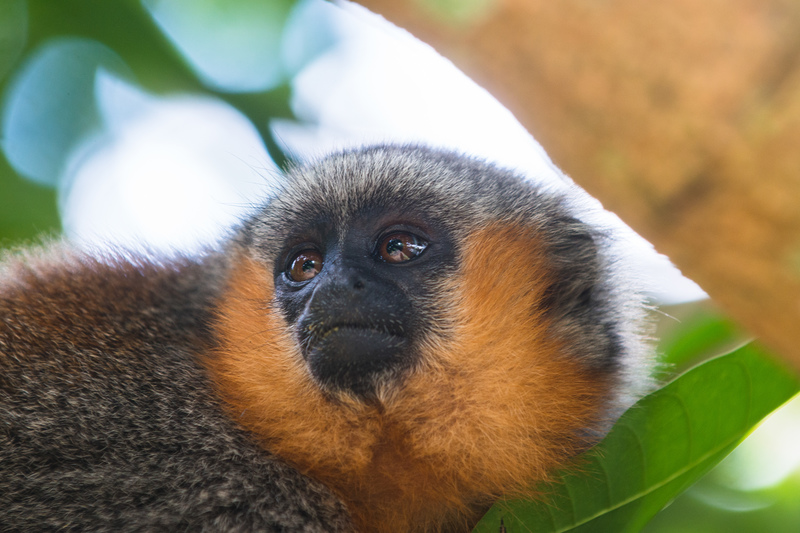
Titi monkey (genus Callicebus). Sawré Muybu Indigenous Land, abode to the Munduruku people, Pará state, Brazil.
Decision
2020 was set to exist a big year for nature and biodiversity. The Convention on Biological Diversity (CBD) was set to reset their 10-twelvemonth priorities for protecting nature and biodiversity. Unfortunately, many of the Aichi Targets fell short — including Target 11 to bring more terrestrial, inland h2o, and marine areas into protected or conservation status. This means we demand even bigger and bolder activeness to protect nature.
While there have been some promising steps for corporate actions and government policy signals for forests and the climate — such as zero-deforestation commitments, moratoriums, streamlining climate into trading agreements, and increasing the expanse under protection and conservation — many commitments take not nevertheless translated to effective action, and the successes are under threat or simply partially implemented.
Our electric current path is non sustainable. Nosotros need to follow through on our commitments, and reconsider our human relationship to biodiversity and nature. It'south becoming more and more clear that if we neglect to protect nature, we'll merely further compromise nature'south ability to provide for us and our commonage well-being.
Source: https://www.greenpeace.org/usa/biodiversity-and-the-amazon-rainforest/
0 Response to "what is happening to the animals in the amazon rainforest"
Post a Comment